

12
Nissan Motor Co., Ltd. announced a comprehensive initiative to reshape its Japan business and strengthen its role in the company’s future growth and global competitiveness.
Guided by its long-term vision, Mobility Intelligence for Everyday Life, Nissan is expanding its product offering, broadening its presence across key market segments and attracting new and younger customers. At the same time, the company will enhance the cost, quality and manufacturing competitiveness of products made in Japan for domestic and global markets.
Together, a broader product offering and industrial transformation will enable Nissan to grow in Japan, expand exports and strengthen Japan’s contribution to the company’s long-term success. A stronger export base will also provide greater resilience by diversifying demand and reducing exposure to market-specific and foreign exchange volatility.
Expanding customer choice across key segments
Nissan is expanding its product offering to answer a broader range of customer needs in Japan, improve market coverage and create greater appeal for existing, new and younger customers.
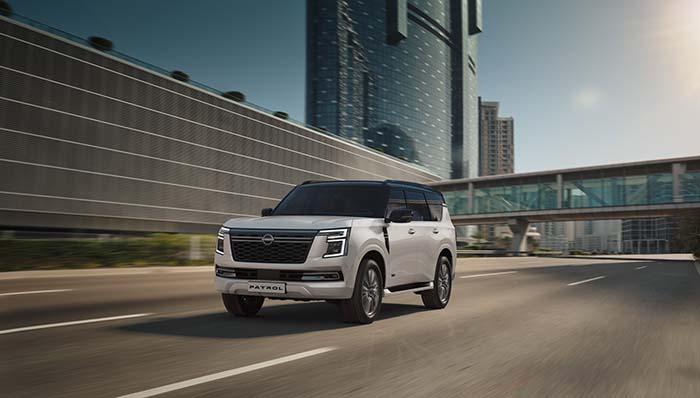
Recent product momentum with Roox, LEAF, Kicks and the all-new Elgrand demonstrates positive customer response and reinforces Nissan’s competitiveness across key segments. Building on this momentum, Skyline, Patrol and a new global B-segment car will further strengthen Nissan’s presence across the market, expanding customer choice and enhancing the breadth of the lineup across Kei cars, electrified vehicles, SUVs, minivans, sports cars and flagship nameplates.
Nissan will advance its Nissan Family Development Strategy by strengthening coordination across product planning, engineering and technology deployment. Greater use of common technologies, architectures and product families will accelerate development, improve efficiency and support a sustained product cadence.
Industrial transformation enabling growth
Supporting this strategy is a manufacturing transformation designed to enhance cost competitiveness, quality and production efficiency. Nissan will focus on three priorities: aligning manufacturing around vehicle families and site expertise, building long-term manufacturing resilience, and maximizing plant utilization. Together, these actions will create a more competitive and efficient industrial foundation for future growth.
By strengthening the competitiveness of vehicles made in Japan for both domestic and global markets, Nissan will support broader market coverage, expand exports and reinforce supply chain resilience. The result will be a more sustainable manufacturing base capable of supporting long-term growth and Nissan’s ambition of producing approximately one million vehicles annually in Japan.
Within this model:
- Tochigi Plant will serve as Nissan’s High Tech Hub for sports cars, electrified vehicles and minivans, supporting domestic and export requirements.
- Nissan Motor Kyushu will serve as Nissan’s Global Model Hub for B- and C-segment vehicles, supporting domestic and export requirements.
- Nissan Shatai Kyushu will further enhance its specialization in body-on-frame and light commercial vehicles serving key global markets.
These footprint actions are the means to achieve Nissan’s wider ambition: more competitive products, growth in Japan and greater exports from Japan.
“Japan is central to Nissan’s future growth and global competitiveness. To make products in Japan that can succeed at home and around the world, we must achieve globally competitive cost, quality and timing. By focusing each facility on its strengths and organizing production around vehicle families, we will build a more efficient manufacturing base that supports domestic growth and increased exports.” Teiji Hirata, Chief Monozukuri Officer
Driving growth in Japan and global markets
Nissan intends to grow its domestic business through stronger market coverage and compelling products while increasing the global contribution of its Japan operations through competitive exports. Exports are a critical component of the strategy, providing both growth opportunities and greater resilience through broader geographic demand and improved flexibility in changing market conditions.
The company’s long-term ambition is to support annual production of approximately one million vehicles in Japan through domestic growth, exports and strategic partnerships. Achieving this ambition requires a more competitive and focused production footprint. Plant rationalization and production transfers are the actions needed to enable growth and reinforce Japan’s strategic importance within Nissan’s global operations.
“Japan must become a source of competitiveness and growth for Nissan. We are broadening our product offering to better serve customers, attract new generations and cover more of the market. By combining this product expansion with decisive industrial transformation, we can sell more vehicles in Japan, expand exports and build a business that can compete and grow for the long term.” Manabu Sakane, Chief of Strategy Acceleration
Proving ground for future technologies
As Nissan’s home market, Japan will serve as a proving ground for advanced technologies, including next-generation ProPILOT and mobility services. Broader market coverage and deeper engagement with younger customers will support renewed brand strength and long-term relevance.
Future production roles and vehicle allocation by plant
Nissan Tochigi Plant
The Nissan Tochigi Plant will serve as Nissan’s High Tech Hub for sports cars, electrified vehicles and minivans, supporting domestic and export requirements.
- Plant 1 will continue as Nissan’s dedicated sports car production hub, manufacturing the iconic Fairlady Z and Skyline.
- Plant 2 will focus on electrified vehicles and minivans, producing the LEAF and Ariya alongside Nissan’s minivan lineup. Over the midterm, production of Serena will transfer from Nissan Motor Kyushu while production of Elgrand will transfer from Nissan Shatai Kyushu.
Nissan Motor Kyushu
Nissan Motor Kyushu will serve as Nissan’s Global Model Hub for B- and C-segment vehicles, supporting domestic and export requirements. The role builds on the plant’s scale, manufacturing expertise and high-efficiency production capabilities.
- Plant 1 will focus on global B-segment vehicles, including Note, Note Aura and Kicks following their transfer from Oppama. A new global B-segment vehicle will also be added to the lineup.
- Plant 2 will focus on global C-segment vehicles, producing Rogue and X-Trail.
Nissan Shatai Kyushu
Nissan Shatai Kyushu will further enhance its specialization in body-on-frame and light commercial vehicles, producing globally recognized models including Patrol, Armada, QX80 and Caravan. Its specialist manufacturing expertise will continue to play an important role in Nissan’s global production network.
During the transfer of production programs, Nissan will leverage shared expertise across its plants through the Nissan Production Way (NPW) to support smooth execution while maintaining high standards of quality and productivity.