

3
In support of the objectives of the Dubai Social Agenda 33, the Community Development Authority (CDA) in Dubai is entering a new phase of institutional transformation aimed at strengthening its readiness to lead a more integrated, proactive and sustainable social ecosystem. The transformation seeks to translate social priorities into measurable projects and initiatives that create tangible impact in the lives of individuals, families and the wider community.
The CDA Corporate Strategy 2027–2031 is aligned with the Social Sector Strategy 2033 and the Dubai Social Agenda 33 as part of an integrated strategic framework. The Agenda sets long-term social priorities, while the Social Sector Strategy translates these priorities into shared directions and targets. The Corporate Strategy, in turn, translates the Authority’s role,
responsibilities and enablers into projects and initiatives that can be implemented and measured.
The Social Sector Strategy 2033 comprises five objectives and 14 transformative initiatives, while the CDA Corporate Strategy 2027–2031 includes five strategic objectives and 43 projects. Together, these efforts aim to generate tangible and sustainable social impact by empowering individuals to live with dignity and independence, strengthening family stability and resilience, and activating the role of the third sector and community participation.
The strategy covers more than 14 community groups, with a focus on measurable outcomes across family stability, social and economic empowerment, early intervention, community participation and quality of life. This reflects a shift from measuring the volume of services delivered to measuring the tangible change they create in the lives of community members.
People and Quality of Life at the Heart of the Transformation
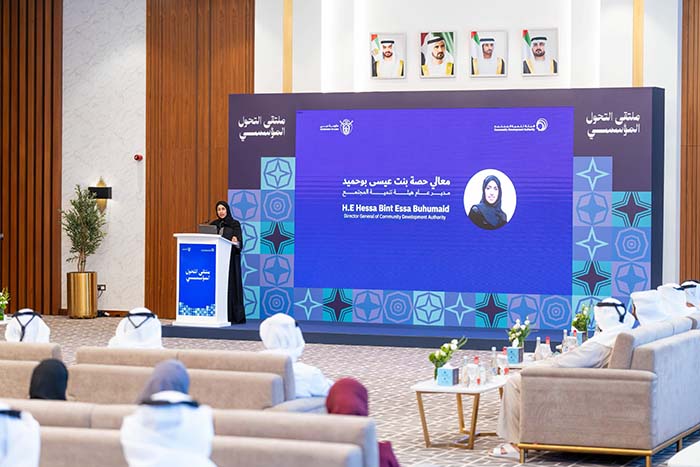
Her Excellency Hessa bint Essa Buhumaid, Director General of the Community Development Authority in Dubai, affirmed that the institutional transformation reflects the leadership’s direction to further develop the social work ecosystem and enhance its readiness to respond to Dubai’s aspirations and the evolving needs of its community, placing people and their quality of life at the heart of the development process.
Her Excellency said: “At this stage, we are moving from focusing on the volume of services to measuring the real impact they create in people’s lives. Our goal is to develop a social ecosystem that is not only capable of responding to needs, but also of anticipating them and intervening at an early stage. This will strengthen individuals’ ability to navigate challenges, support family stability and quality of life, and generate sustainable social impact.”
Her Excellency added: “This transformation supports the objectives of the Dubai Social Agenda 33. Through developing services and capabilities, leveraging data and advanced technologies, and strengthening partnerships and integration across entities, we are translating social
priorities into measurable initiatives and projects, while enhancing our ability to anticipate needs and create sustainable impact for individuals, families and the community.”
From Response to Proactive Intervention
The strategy translates this direction through a range of transformative projects that strengthen early intervention and prevention. Among these is the Social Risks Radar, which aims to monitor and analyse risk indicators and anticipate emerging risks, alongside early detection projects targeting community groups that may be more vulnerable to social risks. These efforts support faster responses and the development of more proactive and effective interventions.
The projects also include Behavioural Insights to Support Family Stability and Sustainability, the Third Sector Growth Accelerator, as well as Family Care Centres and Our Children are Our Responsibility (Ayalna Amanah), supporting the transition towards a more proactive and preventive model of social work.
Data and Artificial Intelligence to Enhance Proactive Social Services
The Authority is leveraging data, artificial intelligence and advanced technologies to strengthen integration across systems and data, support evidence-based decision-making, and anticipate needs and risks, contributing to more effective social services and interventions.
This includes developing the Digital Infrastructure and Artificial Intelligence Strategy, as well as the second phase of the Social Case Management System, which will support process automation and information exchange with relevant government entities, while improving coordination and referrals and enhancing the quality of social interventions.
A More Seamless and Efficient Customer Experience
The institutional transformation also focuses on enhancing the customer experience by simplifying procedures, strengthening digital channels and improving service efficiency, enabling easier and faster access to social support and services.
During 2027–2031, the strategy targets maintaining customer happiness levels above 95%, increasing the use of digital services and channels to more than 90%, achieving 100% compliance with approved service-level standards, and maintaining a complaints resolution rate exceeding 90%.
Institutional Readiness to Deliver the Transformation
As part of its efforts to translate the strategy into institutional practice, the Authority organised the Institutional Transformation Forum at Al Warqa Majlis. The forum reviewed updates related to the Authority’s law and organisational structure, the Social Sector Strategy 2033, and the CDA Corporate Strategy 2027–2031, in addition to the priorities for the next phase.
The Corporate Strategy was also communicated internally, with its key pillars and directions presented to employees to support a unified vision and strengthen the role of teams in translating strategic targets into institutional projects and practices. The Authority’s change readiness assessment recorded a level exceeding 85%, while eight Change Ambassadors were selected from across different sectors to support the adoption of change and reinforce a culture of transformation across the workplace.
The updated organisational structure supports future requirements by enhancing the Authority’s mandates and services, strengthening governance, accountability and integration with government and non-government entities, simplifying the customer journey, improving operational efficiency and advancing data management.
The implementation of the strategy is expected to progressively enhance the integration of the social services ecosystem, improve ease of access and service quality, expand access to third-sector services, strengthen the readiness and capabilities of specialised professionals, and broaden partnerships with the private sector and non-profit organisations in support of social development.
The use of data and the Social Observatory will further strengthen the sector’s ability to monitor social trends and phenomena and respond proactively to emerging challenges. Over the longer term, the Authority will measure the impact of the transformation through indicators related to family stability, empowerment and quality of life, reinforcing the transition towards a more proactive and sustainable social ecosystem and supporting the objectives of the Dubai Social Agenda 33.