

6
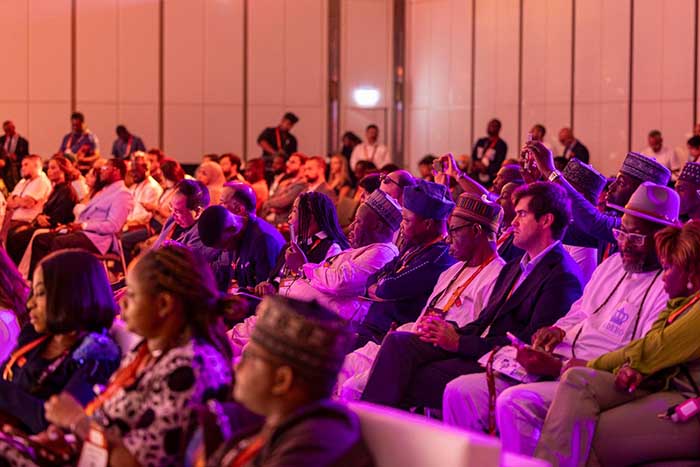
Middle East Energy 2026 emphasised the importance of investment in Africa’s electrical grid through several leadership summit sessions during the show’s third day, 3 September 2026.
H.E. Lerato Mataboge, Commissioner for Infrastructure and Energy, African Union spoke about how Africa’s energy challenge is not a lack of resources but a lack of interconnected power systems and markets. She highlighted Africa’s vast renewable and conventional energy potential, as well as the need to integrate national grids into a continental electricity market through initiatives such as the African Single Electricity Market and the Continental Power Systems Master Plan.
In a fireside chat, Hon. Joseph Olasunkanmi Tegbe, Nigeria Federal Minister of Power, explained Nigeria’s goal to stabilise the electricity sector by improving coordination across generation, transmission, and distribution, addressing grid weaknesses, and restoring dormant infrastructure, which has already added nearly 1,000 MW of available capacity. He highlighted the Electricity Act of 2023 as the country’s most important reform,
decentralizing the market from a single federal system to 37 state-level markets and creating new opportunities for private investment.
This was complemented by a special address by Rilwan Lanre Babalola, Special Adviser to the Nigerian President on Power and Chairman of the Presidential Task Force on Power Sector Reset and Restoration. Babalola said that Nigeria’s energy future is not simply about adding more electricity generation capacity but about building a power system that is reliable, affordable, resilient, and capable of driving economic transformation. He identified three key challenges: improving reliability, supporting economic development, and managing the energy transition. Furthermore, he stressed that success should be measured by the quality and availability of electricity delivered to homes and businesses, not by installed capacity alone.
Additionally, the importance of a clean grid and renewable energy solutions was demonstrated by Mostafa Elshandawily, Co-Founder & CFO of Tayar and Monic Nnaedozie, Co-Founder & COO of Solaristique.
Elshandawily showcased how Tayar replaces delivery riders’ conventional motorbikes with electric bikes with a battery swap system, reducing CO2 emissions and improving profitability. Meanwhile, Nnaedozie demonstrated Solaristique’s solar-powered cold storage solutions that offset greenhouse gas emissions through clean energy and reduced food waste by over 10,000 tonnes.
These spotlighted conversations are particularly important ahead of the launch of Africa Energy in South Africa in 2027 by inD, the team behind Middle East Energy. The themes reflect many of the opportunities and challenges that will define Africa’s evolving energy landscape, from infrastructure development and investment to technology and sustainability. Additionally, they serve as a powerful reminder of the importance of cross-sector collaboration in accelerating progress across the continent.