

The UAE’s construction and real estate sector is entering a new phase in 2026, defined by how efficiently, transparently, and sustainably projects are delivered. With the UAE real estate market projected to reach USD 759 billion by 2029, project management practices are undergoing pressure to deliver on time, on budget, and in line with stricter regulations and ESG expectations.
Against this backdrop, PlanRadar highlights four major shifts that are reshaping how projects are planned, executed, and operated.
From “going digital” to digital discipline
In 2026, the question has changed from “Do we have digital tools?” to “Are our digital processes consistent, auditable, and used by everyone on the project?”
According to Deloitte, 37% of construction businesses were already using AI and machine learning in 2024, representing a 42% increase year on year. The same analysis indicates that moving towards a more unified data environment can deliver significant productivity gains, with construction leaders reporting potential time savings of around 10.5 hours per week.
In the UAE, this push toward digital discipline is visible in tighter expectations from clients and authorities. Developers and government-related entities increasingly require structured documentation and clear audit trails as part of prequalification and contract conditions. Main contractors are standardising workflows and platforms across projects to ensure smoother reporting and comparable KPIs. Consultants are shifting from static PDF reports to structured data and 360° visual documentation, which accelerates approvals, and improves overall accountability.
AI-assisted, data-driven decision-making
Artificial intelligence will remain a major game changer through 2026
With the UAE’s AI market forecast to reach USD 46.3 billion by 2030, its influence on the construction sector is set to deepen, driven by demand for predictive analytics, generative design, and automated monitoring across projects.
PlanRadar expects three AI-enabled use cases to gain particular traction. First, predictive risk and delay analysis will use historical performance data with live site information such as inspection outcomes, RFIs, logistics, and weather to flag zones or work packages at higher risk of delay, allowing teams to intervene earlier and adjust programmes realistically.
Second, smarter defect and quality management will apply image recognition and pattern analysis to detect recurring defects or non-conformances, enabling teams to tackle root causes instead of repeatedly treating symptoms. Finally, operational insights for facilities management bring together sensor data, work order history, and space utilisation trends to optimise maintenance plans, improve cost control, reduce disruptions, and support more reliable portfolio performance.
ESG, compliance, and verifiable records
UAE regulators and capital markets are placing growing emphasis on ESG reporting and disclosure. Mandatory sustainability reporting now applies to listed companies and large financial institutions, and expectations are increasingly being reinforced on developers, contractors, and operators.
Buildings and construction account for roughly 39% of global energy-related CO? emissions, including both operational and embodied carbon. For a country committed to Net Zero by 2050, this places the sector at the centre of climate and resource-efficiency policy.
Authorities and clients are frequently asking for evidence of green building certifications. Whether targeting Estidama, LEED, or other rating systems, project teams must provide traceable records of product approvals, installation methods, commissioning tests, and performance benchmarks. Structured data and visual documentation simplify certification, post-occupancy audits, and long-term ESG reporting.
A cultural shift toward mobile-first collaboration
Perhaps the most visible change in UAE project management is cultural rather than technical. Teams increasingly expect digital, mobile-first ways of working as standard. Site engineers, project managers, consultants, and client representatives want instant access to drawings, issues, photos, and reports—whether they are on site, in the office, or travelling.
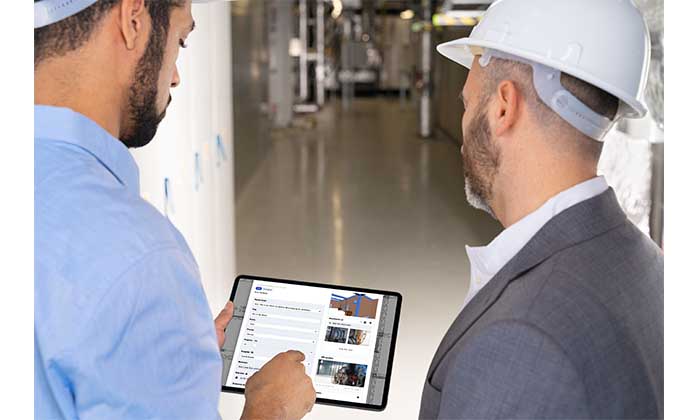
Mobile-first workflows are reshaping collaboration between stakeholders. Instead of relying on fragmented email chains or unstructured messaging apps, structured platforms with real-time notifications and 360° visual documentation ensure everyone is working from a single source of truth. In multicultural, multilingual project environments—common across the GCC—visual records and annotated images in a standardised digital platform helps reduce miscommunication and speed up issue resolution.
From experimentation to execution
The UAE construction market is going digital at speed. Organisations that invest in structured data, AI-ready records, and mobile-first collaboration will be better positioned to meet regulatory expectations, improve transparency, and protect margins in an increasingly competitive environment.As 2026 unfolds, the leaders in UAE construction and real estate will be those who treat digital project management not as a side initiative, but as the backbone of how projects are delivered.