

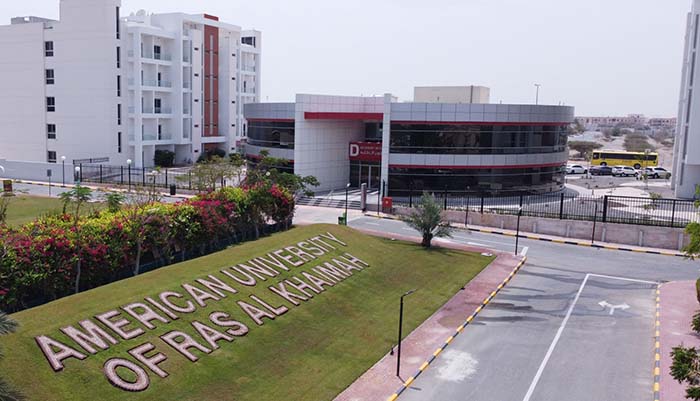
The annual International Conference on Electrical, Electronics, Robotics, Artificial Intelligence, and Informatics (ICERAI 2026) went virtual this year due to the ongoing disturbances in the region, attracting 278 researchers from 24 countries.
Organized by the American University of Ras Al Khaimah (AURAK), the three-day event took a deep dive into latest theoretical and practical developments across a wide range of disciplines, including electrical and electronic engineering, robotics, artificial intelligence, computing, informatics, and emerging technologies such as the Internet of Things (IoT) and data science.
ICERAI serves as a global platform for academics, researchers, and industry professionals to share their research findings, discuss recent advancements, and explore future research directions across interdisciplinary fields.
Prof Bassam Alameddine, President of AURAK, in his welcome speech, described the conference as ‘a global platform for exchange of ideas, presentation of research, and exploration of future directions across interdisciplinary domains.’
“This year’s conference is proceeding despite the war situation in the region, standing as a testimony to resilience in the face of the aggression that the UAE is facing. It affirms that even in times of disruption, the pursuit of knowledge, innovation, and international collaboration must continue. The program packs a rich agenda of scholarly exchange and recognition,” Prof. Bassam said.
The highlight of the conference was the four Keynotes presented by researchers from across the globe.
Prof. Dhiya Al Jumeily OBE, professor of Artificial Intelligence at Liverpool John Moores University, traced the current trends in AI and its progression from logic to artificial general intelligence (AGI) which, he said, would gain further prominence because of its power to apply intelligence across a wide range of tasks similar to human cognitive abilities.
Prof
Talal Yusuf, Executive Dean at Aviation Australia, highlighted the scope and challenges in adopting hydrogen in long-term energy strategies, and showcased Aviation Australia’s ongoing project to build the world’s leading emission-free, low-cost hydrogen-powered electric aircraft.
Prof. Rami Qahwaji, Professor of Visual Computing at the University of Bradford, spoke on how AI was transforming healthcare, space and security sectors. In healthcare, he highlighted AI’s role in medical diagnosis and scans. He demonstrated how space data was becoming the big data; and presented new scanning technology that could boost passenger verification at borders.
Prof. Panos Liatsis, professor in Computer Science at Khalifa University, presented insights into new research into tomographic imaging as an alternative to CT scanning, and showcased its potential to create ‘inexpensive radiation-free portable lung imaging’.
Dr. Ali Al Ataby, Department Chair and Associate Professor, Department of Electrical & Electronics Engineering, School of Engineering and Computing at AURAK, and organizing chair of the conference said the event received 123 papers, of which 74 were accepted. He added: “The selection was done as per a rigorous peer-review process. The papers contained far-reaching solutions capable of transforming our lives in diverse ways.”
Awards were presented for outstanding papers
The paper on ‘Impact of Dynamic Pricing on Stakeholder’s Welfare Using Storage Under a Virtual Power Plant Operation in Demand Response’ won the first place in the Best Paper category. The Best Student Presented Paper Award went to the paper ‘A Hybrid CNN-SVR Framework for Non-Invasive Blood Glucose Estimation Using Photoplethysmography Signals’. Finally, the paper on ‘Breast Cancer Prediction from Breast Ultrasound Images Using Deep Learning’ was declared winner of the Best Presented Paper Award (non-student).