

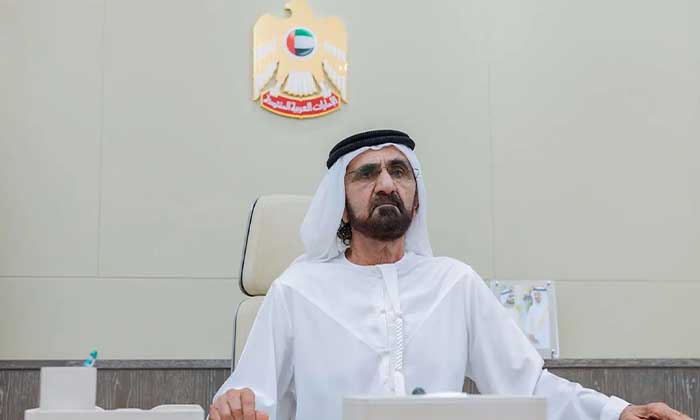
Since assuming leadership of the UAE Government on 5 January 2006, Sheikh Mohammed bin Rashid Al Maktoum has pursued a forward-looking model of nation-building that has driven broad-based development across the country’s key sectors.
Over the past two decades, the UAE has climbed global rankings, establishing itself as a benchmark for effective governance, sustained development, security and long-term stability.
Investment in human capital sits at the core of Sheikh Mohammed’s vision, with education, healthcare and housing positioned as essential pillars supporting national progress and social wellbeing.
During the last 20 years, the UAE Government has invested more than AED 1
1tn, equivalent to nearly USD 300bn. Education received the largest allocation, exceeding AED 170bn, while healthcare and community protection surpassed AED 60bn. Housing programmes for UAE citizens accounted for more than AED 55bn, supporting quality living standards nationwide.
Education has remained a central focus of government policy, supported by initiatives that recognise its role in driving sustainable development and economic resilience.
Today, the UAE’s education system serves more than 1.51 million students across 2,658 public and private schools. Since 2006, the number of schools has increased by 36 per cent, student enrolment by 47 per cent, and the teaching workforce by 195 per cent to almost 150,000 educators.
To better align national priorities in education and human development, the Education, Human Development and Community Council was established to support the creation of an integrated and sustainable education ecosystem.
The council works to align general and higher education with vocational training and life skills, strengthen coordination between government entities, civil society and the private sector, and ensure education policies respond directly to labour market needs.
Over the past two decades, the education sector has undergone rapid digital transformation, marked by classroom technology integration, expanded e-learning platforms and advanced national curricula, including artificial intelligence studies.
Significant investment has also been made in educational infrastructure, with modern school campuses developed to international standards, enhancing student wellbeing and positioning schools as hubs for learning, innovation and extracurricular activity.
At the same time, the UAE has reinforced the role of the Arabic language, Islamic education and national identity within its education system, balancing global openness with cultural heritage.
The country is home to 150 higher education institutions serving more than 200,000 students. Government initiatives such as the National Higher Education Institutions Classification Framework aim to improve global rankings, attract international students and researchers, and strengthen the UAE’s standing as a global knowledge hub.